Wood
or steel?
Both carry cable. The difference shows up in return logistics, export rules and how the drum behaves on the line.
Most cable makers use both. The question is not which material is better, but which drum fits the cable, the journey and what happens to the drum afterwards.
Wooden drums: the workhorse
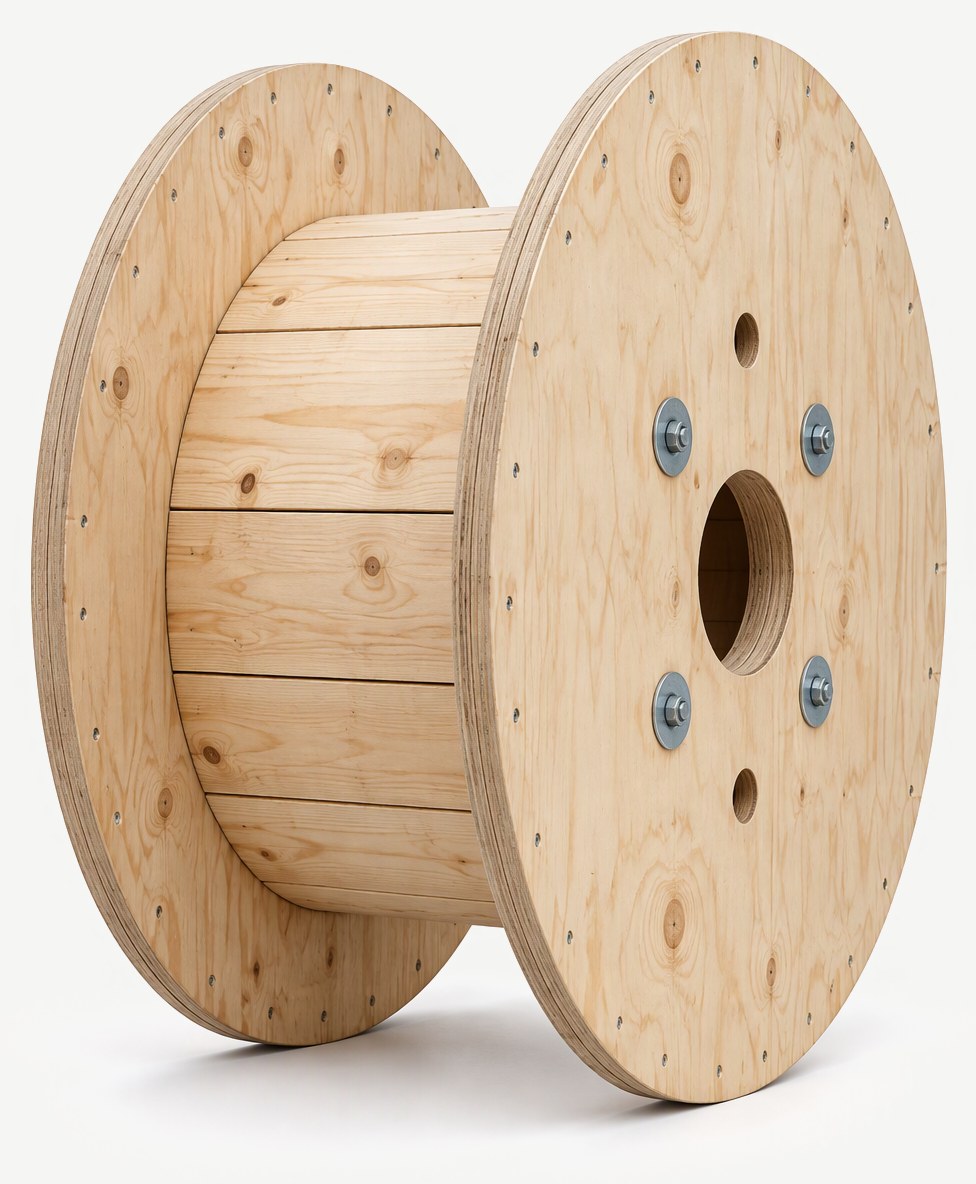
Hardwood flanges and battens are the classic choice for power, telecom and control cable. Wooden drums can be repaired, reused and re-marked, which makes them attractive where drums circulate between a plant and its customers.
They also handle export well when treated correctly: heat or preservative treatment and marking to the destination's requirements. Our wooden range runs from Ø400 mm to Ø3600 mm, assembled or knocked down.
Steel drums: process and shipping
Steel drums come in two very different roles. Process drums live inside the plant — stranders, extrusion lines and drum twisters — and are built for static or dynamic loading depending on whether the drum itself turns under load.
Shipping drums are the compact steel drums used to deliver finished cable: cheek thickness from 5 to 12 mm, diameters from 262 to 588 mm, with an aluminium core or reel, wound with 100 to 500 metres. They protect the cable in transit and survive site handling.
How to choose
- Payload and handling: heavy cable on a large drum favours steel where the drum is reused in-plant.
- Return flow: if drums come back and are reused, repairable wooden drums often win on total cost.
- Destination rules: export treatment and marking requirements can decide the material before price does.
- Line equipment: bore, drive and flange details must match the take-up, whatever the material.
The middle options
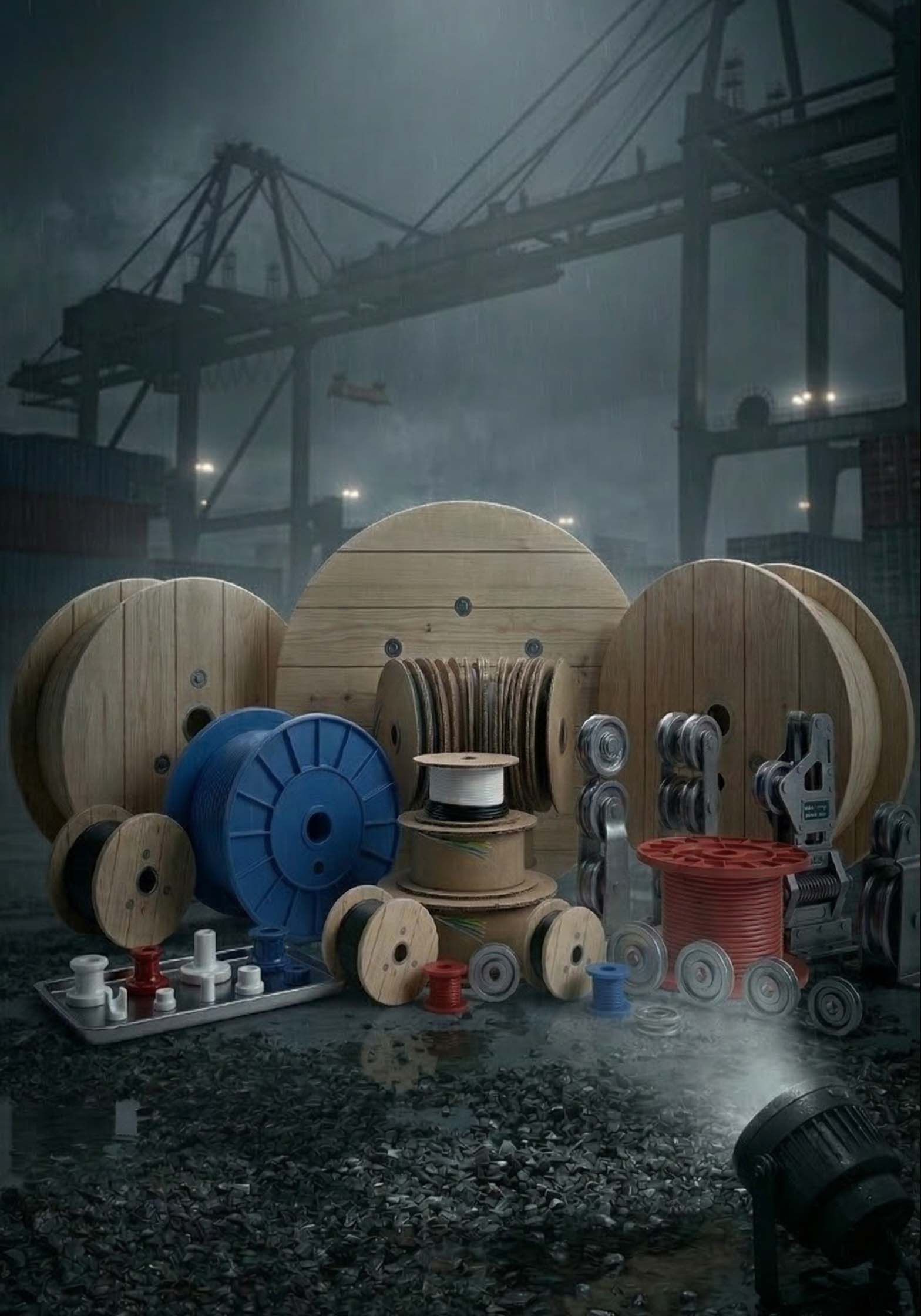
Plywood reels give flatter, cleaner flanges for instrumentation and fine cable. Cardboard reels and ABS spools cover smaller lengths and precision winding. Duak Flex is a knock-down reel that ships flat and assembles on site — you move air instead of drum volume.
One supplier, one drawing
Because we build wooden, plywood, steel, cardboard and ABS drums in the same workshop, the comparison is made on your cable and your logistics — not on what a single production line happens to offer. Send the details and we will quote the two options that fit.